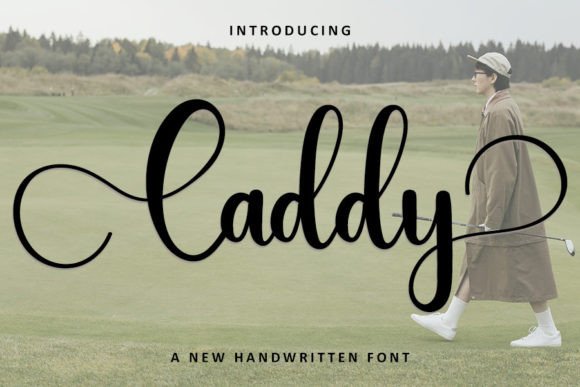
Caddy: A Stylish Handwritten Font for Makers and Creative Sellers
I was sitting at my desk last week, fine-tuning a set of candle labels for a new seasonal line. The scent was fresh, the packaging eco-friendly, but something was missing. That’s when I opened up Caddy—a script font I’d downloaded the day before—and everything clicked. The soft curves, the elegant baseline, the way it felt both modern and timeless—it gave my product a personality I hadn’t been able to achieve with other fonts.
Caddy is more than just a typeface; it’s a design companion for anyone creating handmade goods, printables, or boutique packaging. Its roots in classic calligraphy are evident, but it’s been refined for a contemporary look that feels fresh and wearable across a variety of materials. Whether you're printing labels, crafting digital downloads, or designing greeting cards, Caddy brings a touch of elegance without feeling too formal.
Perfect for Product Labels and Packaging Design
One of the first things I tested was how Caddy looked on product labels. I used it for a line of lavender soy candles and printed the labels on kraft paper. The font’s slightly textured stroke and varied letterforms gave the label a hand-lettered feel that customers often associate with artisan quality. Even at smaller sizes, the letters remained legible, which is crucial when you're printing on 2-inch tags or boutique-style swing tags.
What’s great about Caddy is that it works beautifully in both uppercase and lowercase. For product names or brand logos, I used all caps and noticed how it gave the packaging a bold, yet refined presence. When I switched to lowercase for short phrases like “Hand-poured in Small Batches” or “Made with Natural Oils,” the font softened the tone and added a personal touch.
Creating Invitations and Wedding Stationery with Caddy
Recently, I helped a friend design her wedding invitations. She wanted something elegant but not overly traditional. We used Caddy for the bride and groom’s names and the event date. The font’s swashes and ligatures gave the design a luxurious flair, and when paired with a simple serif font for the body text, it created a balanced, sophisticated look.
I especially appreciated the alternates included in the font package. Being able to swap out certain letters let me customize the design without needing to manually edit each character. This flexibility is a real time-saver when you're working on multiple invitation suites or coordinating save-the-dates, thank-you cards, and welcome signs.
Using Caddy in Digital Downloads and Planner Pages
If you create digital printables—like planners, calendars, or quote cards—Caddy is a fantastic choice. I used it in a digital planner set for the upcoming season and found that it added a soft, personal feel to the layout. Whether it was for section headers like “Monthly Goals” or decorative elements like “Breathe In, Bloom Out,” the font elevated the design without overpowering the structure.
One thing to keep in mind when using Caddy for digital work is spacing. Because it’s a script font, some letters connect while others have slight spacing variations. I made sure to preview each page in different viewing modes to ensure readability on both desktop and mobile devices. It’s also a good idea to test how the font appears when scaled down for smaller thumbnails or preview images in your shop listings.
Pairing Caddy with Other Fonts for Visual Harmony
Like most script fonts, Caddy shines brightest when paired thoughtfully with a supporting font. I often combine it with a clean sans serif like Montserrat or Lato for body text or descriptions. This contrast helps guide the eye and keeps the overall design from looking too busy.
For more rustic or farmhouse-style projects—like a chalkboard sign or a wooden tag—I paired Caddy with a simple serif font for the secondary text. The combination gave the design a grounded, earthy feel while still maintaining a touch of elegance. When designing for boutique packaging or boutique tags, I found that using a bold sans serif as a contrast font helped anchor the layout and balance the delicate nature of the script.
Readability and Design Considerations for Makers
While Caddy is incredibly versatile, it’s best used for short phrases, titles, and decorative text rather than long blocks of copy. It’s a display font at heart, so it works best when used for headings, logos, or accents. For example, I used it for the main title on a printable wall art piece, and then switched to a minimalist sans serif for the quote underneath.
If you're using Caddy for stickers or small printed items, always test the font at actual size before printing. Some of the finer strokes may not cut well on a Cricut or Silhouette if the size is too small. I found that keeping the font size above 14pt for printed stickers and 18pt for laser-cut tags gave the best results without losing clarity.
Commercial Use and Licensing Tips
Before you start using Caddy in your product designs, it’s important to check the licensing terms. Most premium fonts, including Caddy, come with a commercial license that allows you to use the font in physical products, digital downloads, and SVG designs for resale. However, always read the fine print—some licenses may have restrictions on mass production or require an extended license for larger-scale use.
I also recommend checking the included file formats. Caddy typically comes with multiple font styles—like regular, bold, and stylistic alternates—as well as web fonts for digital use. These variations can be incredibly useful when you’re building a cohesive brand identity across both print and online platforms.
Final Touch: Bringing Your Brand to Life with Caddy
Whether you're creating seasonal products for your Etsy shop, designing a line of greeting cards, or preparing digital templates for clients, Caddy adds a layer of craftsmanship that’s hard to replicate with generic fonts. It’s not just about aesthetics—it’s about storytelling through typography. When your customers see your product name in Caddy, they’re not just reading text—they’re experiencing a mood, a moment, a handmade touch.
Try using Caddy in your next design project—whether it’s a candle label, a planner sticker, or a digital wall art print. You might just find that it’s the missing ingredient that brings your creative vision to life.